
If you’ve ever found yourself contorted in the footwell of a hot car, fighting a losing battle against dog hair and crushed biscuits, you know a fundamental truth of car care: interior detailing is punishing work. While machine polishing the exterior gets all the glory and the dramatic before-and-after photos, the interior is where you—and your clients—actually spend the most time.
Your vacuum cleaner is the undisputed workhorse of the detailing arsenal. It dictates the speed, efficiency, and ultimate success of an interior valet. But when the time comes to upgrade your equipment, you are immediately confronted with the industry’s longest-running debate: do you stick with the raw, uninterrupted power of a corded vacuum, or do you embrace the modern flexibility of a cordless model?
Choosing the wrong machine doesn’t just cost you money; it costs you time, patience, and potentially professional results. In this guide, we are tearing down the corded vs. cordless car vacuum debate. We will look past the marketing jargon, examine real-world detailing scenarios, and help you determine exactly which setup belongs in your garage or mobile detailing van.
The Mechanics of Suction: What Actually Matters
Before we pit battery power against mains electricity, we need to establish what makes a car vacuum effective in the first place. When browsing specifications, manufacturers often shout about wattage, but wattage only tells you how much electricity the motor consumes, not how much work it performs. Instead, you need to look at two crucial metrics:
-
CFM (Cubic Feet per Minute) or Airflow: This is the volume of air the vacuum moves. High airflow is what pulls loose debris, leaves, and dust into the nozzle.
-
Water Lift (Static Pressure): This measures the vacuum's pure pulling strength. High water lift is what yanks embedded sand out of tight carpet fibres and rips pet hair off upholstery.
Car carpets are notoriously cheap, densely woven, and hold onto dirt with a vice-like grip. Therefore, you need a vacuum that delivers a knockout combination of both high airflow and aggressive water lift to achieve a truly deep clean.
The Case for the Corded Car Vacuum: Unyielding Power
For decades, the standard corded shop vacuum has been the anchor of professional detailing bays. These machines plug directly into a 240V mains supply and are designed to run at maximum capacity for hours on end without breaking a sweat.
Why Detailers Love Corded Vacuums
The primary advantage of a corded vacuum is brute force. Because they aren't restricted by battery cell output, corded units typically house much larger, heavier motors capable of generating massive static pressure. When you are faced with a neglected family car that has endured years of muddy football boots and beach trips, a corded machine will rip that deeply embedded sand out of the floor mats faster than anything else.
Furthermore, corded vacuums offer the luxury of infinite runtime. Whether you are doing a quick twenty-minute tidy-up or embarking on a six-hour interior restoration, the suction remains 100% consistent from the moment you switch it on to the moment you power it down.
Corded units also tend to boast larger dustbin capacities, meaning you can tackle multiple heavily soiled vehicles before needing to stop and empty the drum.
The Drawbacks of the Cord
The very thing that gives a corded vacuum its power is also its greatest weakness. Managing a heavy extension lead around a vehicle is a constant source of frustration. The cord snags on tyres, drags across freshly polished paintwork, and gets caught underneath your detailing stool.
For mobile valeters working out of a van, relying on a corded vacuum means you are entirely at the mercy of your client’s electrical outlets. If they live in a terraced house or an apartment block, you either have to run fifty metres of extension cable across a public pavement or invest in a loud, expensive petrol generator to power your tools.
The KillerBrands Pick
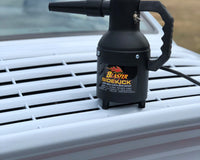
If you are looking for the ultimate corded powerhouse, the MetroVac Vac n Blo 500 (VM12500) is an absolute titan in the detailing world. It is incredibly compact for a corded unit, yet it houses a fiercely powerful motor that doubles as a forced-air blower. It’s perfect for blowing standing water out of panel gaps after a wash, and instantly switching to a high-lift vacuum for the interior.
The Case for the Cordless Car Vacuum: Ultimate Freedom
Five years ago, a battery-powered vacuum was viewed as a gimmick—a weak tool suitable only for picking up a few loose crumbs from a dashboard. Today, thanks to massive leaps in lithium-ion technology and the development of highly efficient brushless (BLDC) motors, cordless vacuums are aggressively challenging the corded status quo.
The Evolution of Battery Tech
Modern professional cordless vacuums run on high-capacity 18V or 20V battery platforms. These aren't the cheap, fade-prone batteries of the past. Brushless motors generate less friction, run cooler, and extract maximum efficiency from the battery cells, providing suction levels that snap aggressively at the heels of standard corded machines.
The defining benefit of a cordless vacuum is unparalleled mobility. You can simply pick the machine up, walk over to the car, and start vacuuming immediately. There is no wrestling with extension cords, no searching for plug sockets, and absolutely zero risk of dragging a dirty electrical cable across a freshly corrected side skirt. For quick turnarounds and maintenance washes, this sheer convenience shaves valuable minutes off your workflow.
The Limitations of Going Cordless
The reality of battery power is that you are always working against a ticking clock. Most high-performance cordless vacuums will give you anywhere from 15 to 40 minutes of runtime on their standard settings, and significantly less if you constantly use the 'boost' or maximum suction modes required for thick carpets.
As the battery drains, some models suffer from a drop in suction power, meaning the final floor mat you vacuum won't be as clean as the first one you tackled. To overcome this, you need a system with interchangeable batteries, which significantly increases your initial investment.
Cordless vacuums also prioritise a compact footprint, which inevitably means a smaller dustbin. You will be emptying a cordless vacuum much more frequently than a heavy-duty corded tub.
Head-to-Head Showdown: Which Reigns Supreme?
To help you make the right investment, let’s pit these two technologies against each other in the specific scenarios detailers face every day.
1. Deep Cleaning and Embedded Debris
When dealing with thick, heavily soiled carpets, sheer water lift is required to pull dirt from the base of the fibres. A corded vacuum will almost always win this battle. A cordless vacuum can handle surface debris beautifully, but if you are dealing with years of ground-in dirt, the relentless, fade-free power of a mains-connected motor is unmatched.
Winner: Corded
2. Dealing with Pet Hair
Dog hair weaves itself right into the fabric of car seats and boot liners. Vacuuming pet hair requires sustained, aggressive suction paired with friction from a specialised brush attachment. Because this is a time-consuming process that demands maximum power for extended periods, a cordless vacuum’s battery will deplete very quickly under the strain.
Winner: Corded
3. Wet & Dry Extraction
Many detailers use their vacuums to extract water after shampooing seats and carpets. Both corded and high-end cordless models offer wet and dry capabilities. However, extracting liquid is heavy work. While a cordless unit is fantastic for quickly sucking up a small spill, a corded unit is much better suited to extracting a whole interior's worth of shampoo residue without dying halfway through the job.
Winner: Tie (Cordless for quick spills, Corded for full extractions)
4. Speed, Setup, and Convenience
This is where the cordless vacuum utterly dominates. When a client arrives for a standard maintenance valet, the interior usually just needs a quick dust and a light hoovering. Dragging out a heavy corded vacuum, unwinding the lead, and plugging it in takes longer than the actual vacuuming itself. A cordless machine allows you to simply grab and go, massively speeding up your workflow.
Winner: Cordless
Real-World Scenarios: Choosing the Right Tool for the Job
Your choice should be dictated by your environment and the type of detailing you undertake.
The Weekend Enthusiast
If you are maintaining your own vehicles on a Sunday afternoon, a high-quality cordless vacuum is likely the best choice. You clean your cars regularly, meaning the dirt never gets too heavily embedded. The convenience of a battery-powered unit means you are far more likely to quickly hoover the footwells after a trip to the shops, keeping the car pristine year-round.
The Mobile Valeter
This is the toughest category. As a mobile operator, space in your van is at a premium, and you cannot always guarantee access to mains power. A premium cordless setup with multiple spare batteries is often the ultimate solution, providing total independence from the client’s house. However, many high-end mobile detailers carry both: a cordless for maintenance jobs, and a compact corded unit coupled with a generator for heavy disaster details.
The Fixed-Location Detailing Studio
If you operate out of a fixed unit or a dedicated home garage, a corded vacuum is the logical primary choice. You have unlimited access to power, and you will likely encounter heavily soiled vehicles that require deep extraction and long hours of continuous suction. A wall-mounted corded setup with an extra-long hose is the gold standard for studio efficiency.

Maximising Your Vacuum's Performance (Pro Tips)
Regardless of whether you choose battery or mains power, a vacuum is only as effective as the technique of the person holding the hose. Here is how professional detailers extract maximum performance from their machines.
Agitation is Your Best Friend
Never rely solely on suction. Car carpets are designed to hide dirt. Before you even turn the vacuum on, take a stiff-bristled upholstery brush (or a drill brush attachment) and vigorously scrub the dry carpet. This breaks the static bond between the carpet fibres and the dirt, bringing sand and pet hair to the surface where even a lower-powered cordless vacuum can easily sweep it away.
The Importance of Crevice Tools and Attachments
The nozzle at the end of your hose dictates how that suction is applied. A wide floor nozzle spreads the vacuum's pulling force over a large area, reducing its lifting power. When tackling stubborn debris, switch to a narrow crevice tool. By forcing the same volume of air through a much smaller opening, you massively increase the velocity and targeted suction power. Always ensure your chosen vacuum comes with a robust selection of detailing-specific attachments, including soft horsehair dusters for delicate dashboard plastics and rigid, narrow wands for reaching down beside the transmission tunnel.
Mechanical Advantage for Pet Hair
A standard vacuum nozzle will simply glide over woven-in terrier hair without removing a single strand. To conquer pet hair, you need mechanical agitation. Use a dedicated rubber pet hair brush to physically scrape the carpet. The rubber builds up a static charge, rolling the embedded hairs into large, manageable clumps that sit on the surface. Once clumped, even a moderate-power vacuum can easily suck them away.
Harness the Power of Compressed Air
If your vacuum has a blower function (like the MetroVac), or if you have a separate air compressor, use it in tandem with your suction tool. Blow compressed air under the seats, into the seat rails, and through the air vents while holding the vacuum nozzle nearby. The air blasts the trapped dust out of the crevices, and the vacuum instantly catches it mid-air. This technique will save you hours of struggling with crevice tools.
Maintenance is Mandatory
A vacuum operates by pulling air through a filter. As soon as that filter becomes clogged with fine dust, your airflow drops dramatically, severely crippling your suction power. Empty your dustbin regularly, and make a habit of banging out or washing your filters at the end of every detailing session. A cheap corded vacuum with a clean filter will vastly outperform a premium cordless unit with a blocked filter.
The Final Verdict: Which Should You Buy?
The debate between corded and cordless car vacuums doesn't have a single, universal winner. It is entirely a question of application.
If you demand absolute, unwavering power, if you frequently tackle heavily soiled, neglected interiors, and if you have reliable access to mains electricity, the corded vacuum remains the undisputed king of deep cleaning. Machines like the MetroVac deliver a level of sustained pulling power that batteries simply cannot match over a three-hour period.
However, if your priority is speed, mobility, and convenience, and you are primarily performing maintenance details or working in a mobile setting without guaranteed power, a premium cordless vacuum is a transformative investment. Modern battery units provide more than enough suction for 90% of detailing tasks, wrapped in a package that makes the physical act of cleaning vastly less frustrating.
For many professional detailers, the ultimate answer is to own both: a heavy-duty corded extractor in the corner of the garage for the worst-case scenarios, and a nimble cordless unit on the detailing cart for everything else. Equip yourself properly, maintain your tools, and you’ll find that interior detailing suddenly feels a lot less like a battle.